


4 Wheel Driving on the South Coast

4 Wheel Driving and off-road driving on the South Coast of Western Australia is great...
Western Australia has some of the best four wheel driving in the world and the Rainbow Coast offers much to the 4 Wheel Driver!
There are a variety of off road trails including Boat Harbour, Blue Hole,Rame Head, Peaceful Bay, Eagle Bluff,Parry Beach,West Cape Howe, The Long Point track including Long Point, Little Long Point and Hush Hush, plus Torbay Inlet to Cosy Corner.One of the most secluded and dramatic is Boat Harbour.
Some of the most accessible Four Wheel Driving tracks include Torbay Inlet (near Albany), Peaceful Bay (towards Walpole), and William Bay National Park's Mazzoletti Beach.
Probably the most challenging beach of all is Bornholm Beach at West Cape Howe. (Reported to be one of the most difficult beaches to access in all of Australia!)
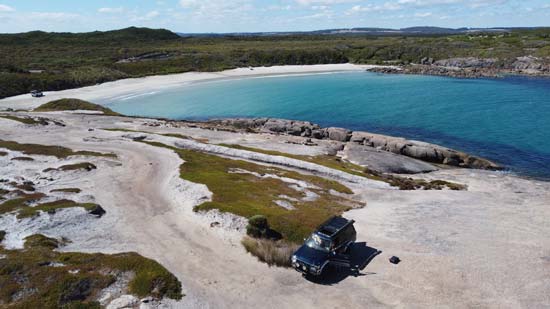
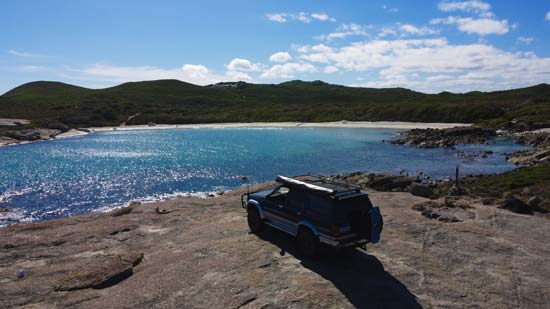
The freedom to go further than most...
"All vehicles are required to stay on established roads or tracks. Vehicles may only be used off a public road or track (e.g. a beach) if an area has been designated for such use.In the case ofNational Parksand conservation parks, this designation is generally conferred through the preparation of a management plan, which involves extensive public participation. Similarly, off-road vehicle use in all other reserves and State Forest is not permitted, unless so designated. In other words, ‘bush bashing' or travelling cross-country is not allowed."~ Dept of Environment and Conservation
Take the time to plan thoroughly...
4 Wheel Driving can be dangerous to an inexperienced driver, and even the most experienced drivers can still get stuck or stranded, so please take the time and effort to thoroughly plan your adventure.
If you are heading to remote areas notify someone of your trip and your estimated time of return and make sure that your vehicle is maintained in good working order before setting out.
Ensure you pack basic supplies such as water, food, first aid kit, extra fuel as well as vehicle maintenance equipment.
The minimum 4WD essentials kit would include: polarised sunglasses, air compressor with gauge, tow rope, strong attachment points on your chassis, bow or ‘D’ shackles, jack and a jack plate or air exhaust jack, vehicle tool kit, rigger’s gloves, recovery tracks, a shovel and a tarp.
Reduce your tyre pressure before entering off-road tracks and sandy beaches and reduce your driving speed to compensate for deflated tyres. Ensure that they are re-inflated after off road driving.
If you get lost, stay where you are. You’ll be found sooner if you don’t stray from tracks. If your vehicle breaks down or becomes stuck, stay with your vehicle. A vehicle is much easier to spot from the air than a person. EMERGENCY- Dial 000
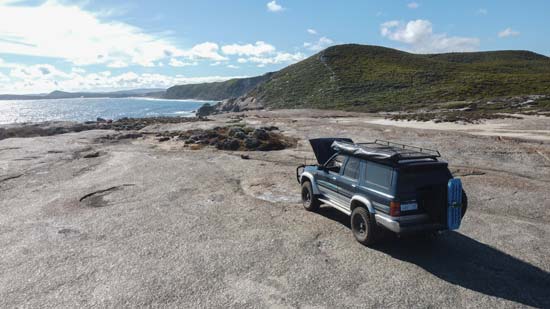
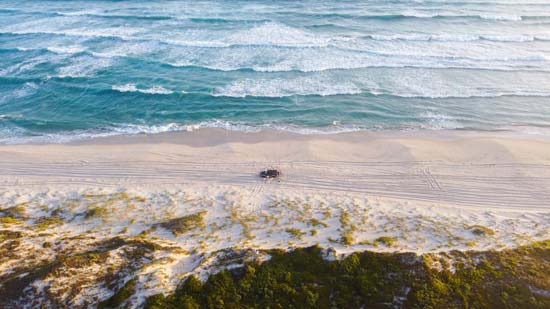
What to do if you get stuck
Getting bogged or stranded is common when 4 wheel driving, espically when you are not familiar with the track, weather, or other variables. The image above features us stuck on Parry Beach, with the soft sand preventing us from moving our vehicle, even with deflated tyres. The first thing you should do when you find yourself stuck is assess any possible risks to you or your vehicle. Eg. are you sinking? is the tide coming in? Once youve assessed these risks make sure everyone is in a safe location, your car can be replaced, you and your family cannot.
Next, try and find someone near you that can help, most other 4 wheel drivers will be happy to help get you out, if there isn't anyone around to assist you, consider attempting to free yourself with the use of the 4WD tools you have. If attempting to free your vehichle is dangerous or you dont feel confident attempting to do so, please call a professional. IF YOU ARE IN DANGER CALL 000
Be respectful of our environment and others...
All normal road rules apply when driving in off-road areas.Always drive slowly with your seatbelt on.
Use the existing Passing Points and slow down when passing other others.
No littering...If you bring it in then please bring it out again!
Beach driving has the potential to impact negatively on animals, please use care. Nesting Shorebirds on sandy beaches, estuaries and wetlands are difficult to see.
There may also be reptiles lounging at the side of the tracks, as well as other wildlife and kangaroos.
Protect from Dieback...
Vehicles can carry the pathogen and spread the disease Dieback.
Please clean any mud and soil off your vehicle, especially the tyres, wheels and underside, before and after your trip and keep to established tracks and roads.
Avoid travelling in wet and mud conditions and respect current track closures.
South Coast 4 Wheel Driving Locations in Albany, Denmark, Walpole and Surrounds
4 Wheel Driving on the South Coast
Tap the markers for information about the locations on the Map below.
What's on the map? These are the locations plotted above:
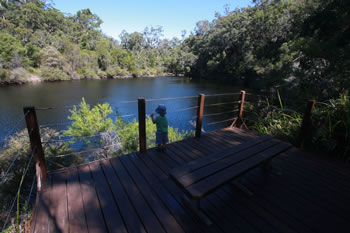 Walpole-Nornalup National Park
 Expansive covering over twenty thousand hectares of the Walpole Wilderness Area. Visit Walpole-Nornalup National Park
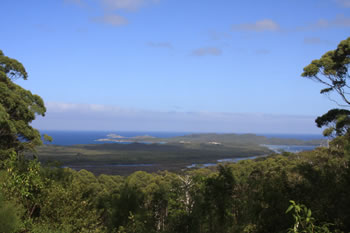 Walpole-Nornalup National Park Map
 Map of the Walpole-Nornalup National Park Visit Walpole-Nornalup National Park Map
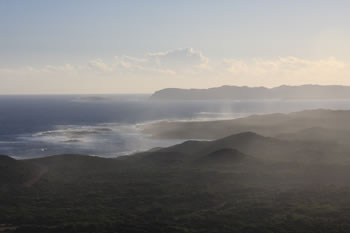 William Bay National Park
 Visit Greens Pool, Elephant Rocks, Mazzoletti Beach, Tower Hill, Madfish Bay and Waterfall Beach! Visit William Bay National Park
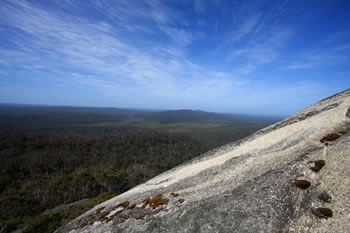 Mount Frankland
 Starting in the karri trees you wind up and through towards the summit of Mt Frankland way above the tree top canopy. Visit Mount Frankland
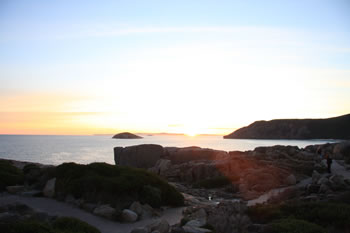 Torndirrup National Park
 Including The Gap, Natural Bridge, The Blowholes, Jimmy Newells Harbour, Stony Hill, Cable Beach & Stony Hill. Visit Torndirrup National Park
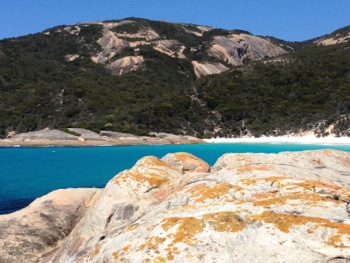 Two Peoples Bay NP
 Located approximately 25 kilometres north-east of Albany. Rediscovery of the presumed extinct noisy scrub-bird. Visit Two Peoples Bay NP
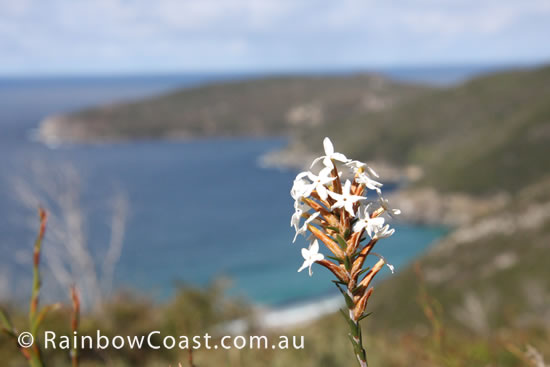 West Cape Howe National Park
 Containing the southernmost point of Western Australia this national park is astounding. Visit West Cape Howe National Park
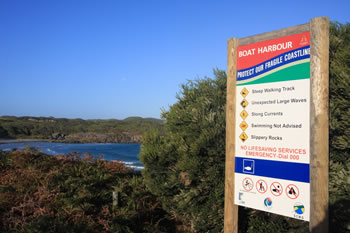 Boat Harbour
 The path through Quarrum Nature Reserve which leads to Boat Harbour offers great views of the Southern Ocean. Visit Boat Harbour
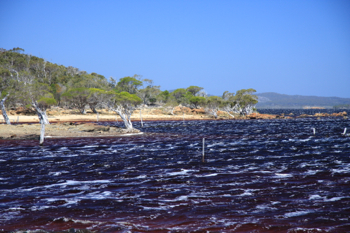 Broke Inlet
 Broke Inlet is located in Dentrecasteaux National Park approximately 40km west northwest of Walpole Town. Visit Broke Inlet
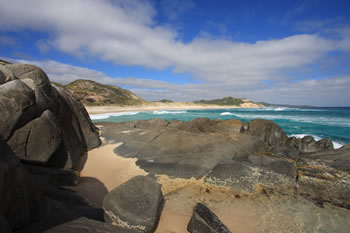 Dentrecasteaux National Park
 Dentrecasteaux National Park is filled with beaches, dunes, cliffs and forests west of Walpole. Visit Dentrecasteaux National Park
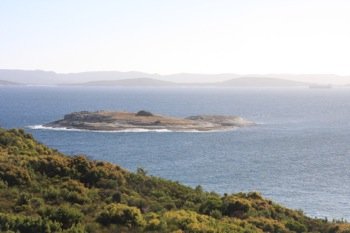 Gull Rock National Park
 25k east of Albany, Gull Rock National Park is a reserve for many endangered animals, trees and birds. Visit Gull Rock National Park
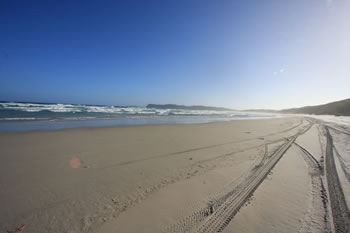 Mazzoletti Beach
 Mazzoletti Beach stretches from Greens Pool in the East by foot to Parry Beach in the West by car where it crosses the Parry Inlet at Parry Beach Visit Mazzoletti Beach
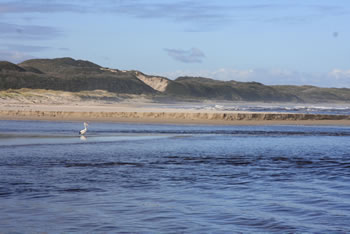 Peaceful Bay
 Peaceful Bay beach is split in two by the Irwin Inlet as it discharges into the ocean. Sand dunes abound. Visit Peaceful Bay
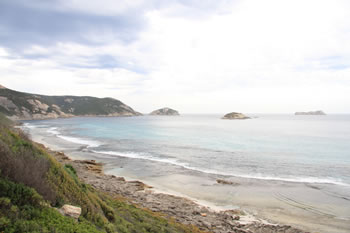 Sinker Reef
 It is easy to see why it was given this name as the jagged black rocks rise in rows along the entire stretch of coastline. Visit Sinker Reef
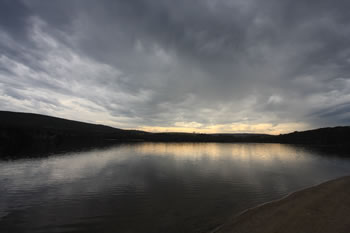 Taylor Inlet
 Taylor Inlet near Nanarup is a winding Inlet, home to many species of waterbirds. Visit Taylor Inlet
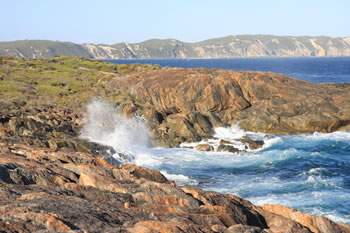 Wilson Head
 Wilson Head marks the eastern perimeter of Ratcliffe Bay, stretching out into the Great Southern Ocean. Visit Wilson Head
4WD tracks and trails: Boat Harbour Beach, Blue Hole Beach, Rame Head, Peaceful Bay Beach Access, Eagle Bluff, Parry Beach, West Cape Howe and Torbay Inlet to Cosy Corner.
Resources for 4 Wheel Drivers on the South Coast; Albany, Denmark and Walpole
Code Off Road brochure, by Track Care WA:
A guide to safe and responsible 4WD driving
https://parks.dpaw.wa.gov.au/
Western Australian Four Wheel Driving Association:
Useful information about 4WD driving and clubs in Western Australia
https://www.wa4wda.com.au
Parks and Wildlife Service:
Safety in the National Parks
https://parks.dpaw.wa.gov.au/
Rainbow Coast Regions:
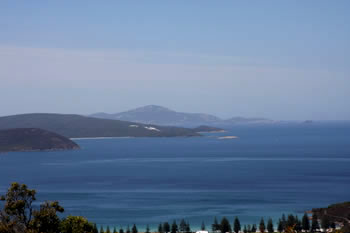 Albany Region
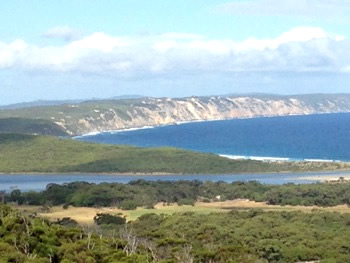
 The Albany Region of Western Australia is a land of mountains and waterways. An amazing region to explore. Visit Albany Region
 Denmark Region
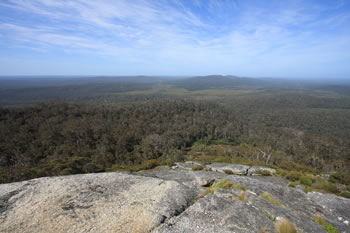
 The Denmark Region is gorgeous. Trees, hills, beaches, rocks, wildlife around the river and the inlet. Visit Denmark Region
 Walpole Region
 Walpole is the western end of the Rainbow Coast and is surrounded by National Park and forested wilderness. Visit Walpole Region
Main Attractions on the Coast:
 Ocean Beach
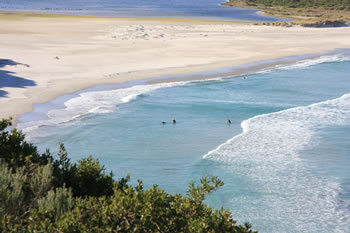
 Ocean Beach is set between the Wilson Inlet and the Great Southern Ocean, and is the closest beach to Denmark Town. A popular surfing spot and lookout.. Visit Ocean Beach
 Greens Pool
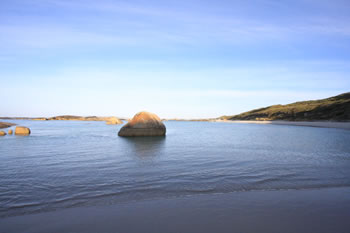
 Almost completely sheltered from the waves of the Great Southern Ocean, Greens Pool is a paradise. Visit Greens Pool
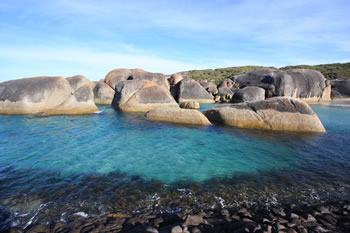 Elephant Rocks
 Giant rocks shaped like elephants stand together facing into the waves of the Great Southern Ocean Visit Elephant Rocks
Mount Frankland Starting in the karri trees you wind up and through towards the summit of Mt Frankland way above the tree top canopy. Visit Mount Frankland
Two Peoples Bay NP Located approximately 25 kilometres north-east of Albany. Rediscovery of the presumed extinct noisy scrub-bird. Visit Two Peoples Bay NP
West Cape Howe National Park Containing the southernmost point of Western Australia this national park is astounding. Visit West Cape Howe National Park
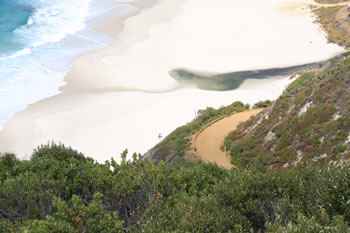 Shelley Beach
 Turquoise waters, verdant surrounds and ocean breeze make this beach a popular yet remote destination. Visit Shelley Beach
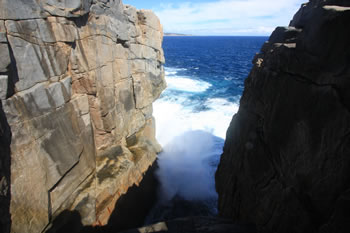
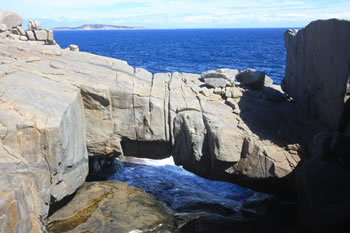 Natural Bridge
 The Natural Bridge is a granite formation caused by the gradual wearing away of the rock by the Great Southern Ocean. Visit Natural Bridge
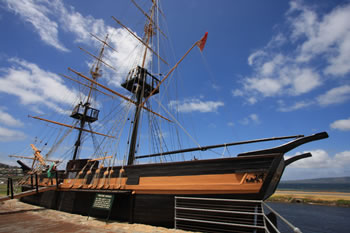 Brig Amity Replica
 Experience the first settlers arrival in Albany, the first settlement in Western Australia, from onboard a replica of the Amity. Visit Brig Amity Replica
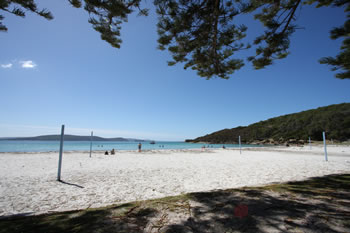 Middleton Beach
 The most popular beach in Albany. Swim or relax under the trees. Cafes and amenities. Visit Middleton Beach
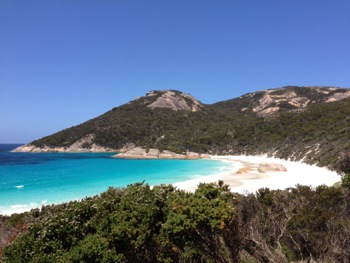 Little Beach
 This gorgeous beach is approximately 25 kilometres north east of Albany in Two Peoples Bay National Park. Visit Little Beach
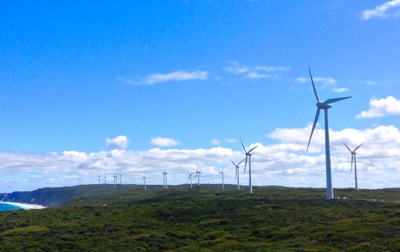 Albany Wind Farm
 Beautiful and productive green energy from the wind of the Torndirrup, just outside Albany City towards Frenchman Bay. Visit Albany Wind Farm
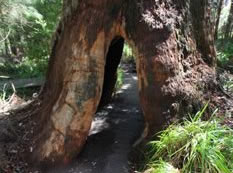 Ancient Empires Walk
 The Ancient Empires Walk takes you through the forest at the base of the Giant Tingle Trees at the Treetop Walk. Visit Ancient Empires Walk
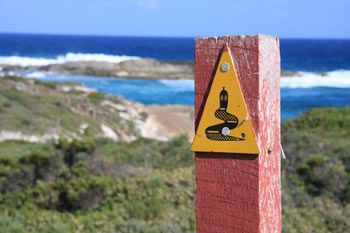 Bibbulmun Track
 The Bibbulmun Track stretches from Kalamunda in the Perth hills to Albany, through many locations in the heart of the Rainbow Coast. Visit Bibbulmun Track
 Denmark Wineries
 Denmark Wineries and Vineyards to visit while on holiday along the Rainbow Coast. Wineries with restaurants, music, cellar doors and more! Visit Denmark Wineries
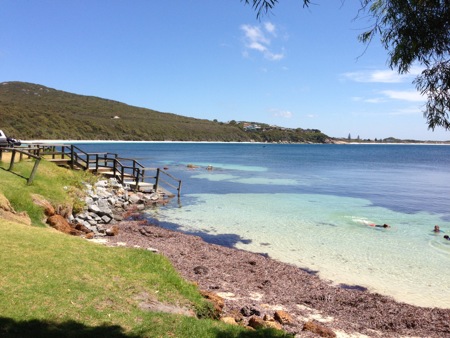 Frenchman Bay
 Located on the southern side of King George Sound this beautiful setting has a grassy picnic area, BBQs and boat launch. Ideal beachfront location for a great day out! Visit Frenchman Bay
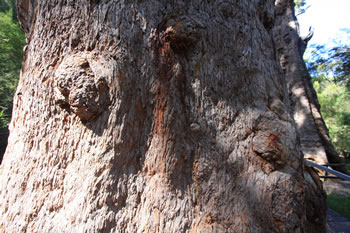 Giant Tingle Tree
 This Giant Tingle Tree is special because it the oldest living eucalypt in the world. It is an 800 metre walk from the car park to the Giant Tingle and back. Visit Giant Tingle Tree
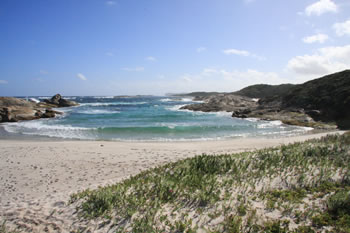 Lights Beach
 Inspiring lookout and beach offering spectacular views of William Bay from the east. A favourite local beach. Visit Lights Beach
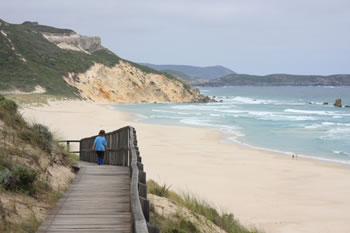 Mandalay Beach
 Spectacular views to Chatham Island, gorgeous white sandy beach it is a must-see... sometimes the shipwreck is visible too. Visit Mandalay Beach
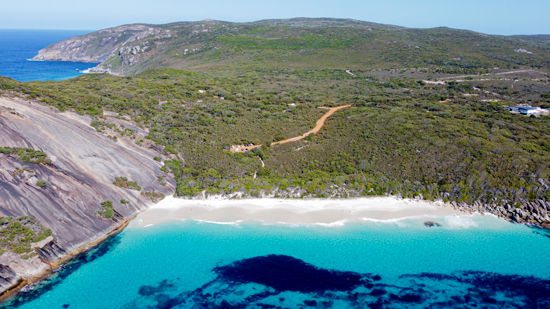 Misery Beach Albany
 Misery Beach is a hidden gem on the southern coast of Western Australia known for stunning natural beauty and a tranquil atmosphere. Visit Misery Beach Albany
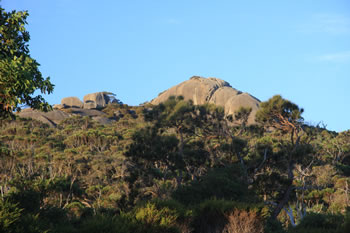 Monkey Rock
 Spectacular elevated views over William Bay Nat. Park, Ratcliffe Bay, Ocean Beach and the Nullaki Peninsula. Visit Monkey Rock
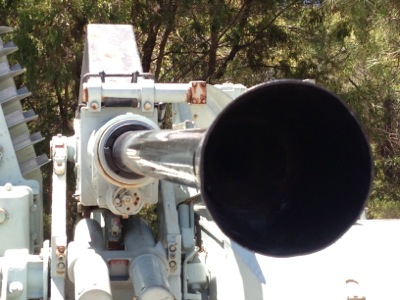 Princess Royal Fortress
 One of the best outdoor military museums in Australia. The Fortress is within the Albany Heritage Park, atop Mount Adelaide. Visit Princess Royal Fortress
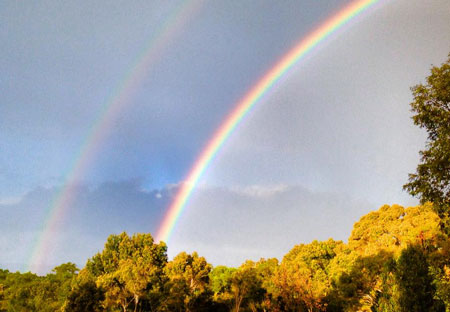
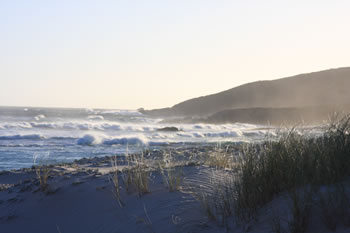 South Coast Beaches Map
 South Coast Beaches from west of Walpole to East of Albany all on one map! Visit South Coast Beaches Map
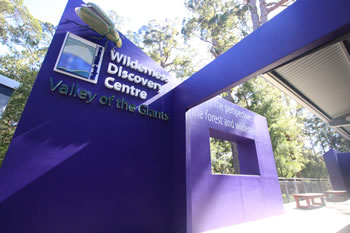 Valley of the Giants
 The Valley of the Giants Wilderness Discovery Centre at the Treetop Walk is the most visited place on the Rainbow Coast. Visit Valley of the Giants
Other amazing locations in the South-West of Western Australia!
More information on the south-west coast in our other Western Australian travellers guides:
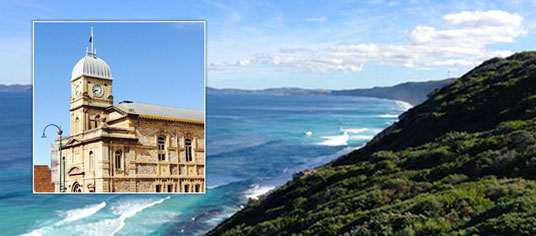
Albany Tourist Information:
Albany WA
The Albany is the oldest settlement in Western Australia. Filled with history, surrounded by beaches and waterways, and a great place to visit while on holiday on the south coast of WA. Visit Albany today.
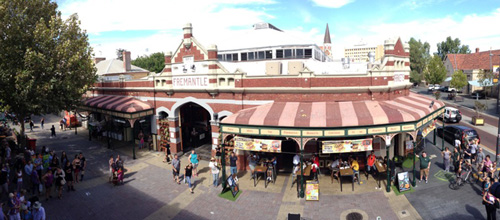
Have you visited?
Fremantle WA
Fremantle, the Port City, is located south-west of Perth at the mouth of the Swan River. Fremantle's vibrant nightlife, music scene and cafe' culture make Fremantle a perfect getaway from the bustle of Perth. Beaches, history, shopping, dining out, and more. VISIT FREMANTLE
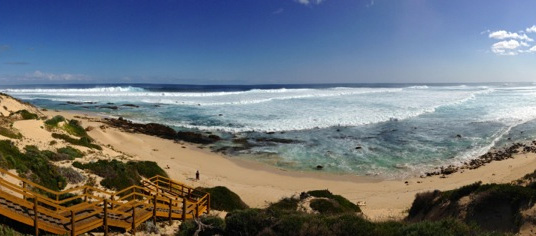
Have you visited?
Margaret River, WA
The Margaret River Region is an area of magnificent beauty on the western coast of the south west of WA. From the expansive shores of Busselton on Geographe Bay, through Dunsborough & Margaret River to Augusta, the Margaret River Region is fantastic. VISIT MARGARET RIVER
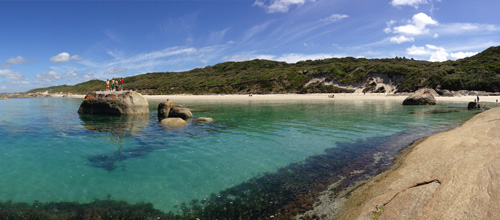
Have you visited?
Denmark WA
Denmark WA is one of the most beautiful places along the south coast as it has forests, beaches, rivers and waves. Everything you need for the perfect south coast holiday. Denmark Wineries are popular too! Info on Denmark Town including shopping, dining & history, VISIT DENMARK WA