


Whales of the Coast
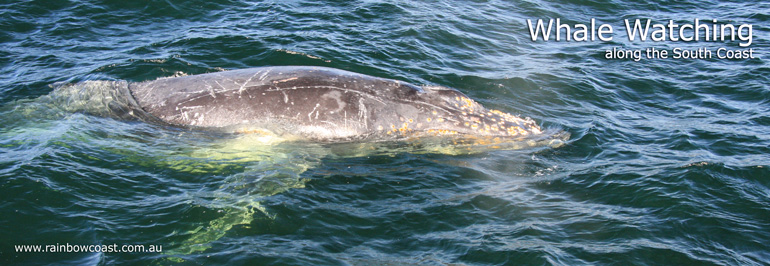
Each year tourists from around the world visit the south coast to catch a glimpse of the whales. The Great Southern Ocean is home to a huge whale population who breed and feed in the bays.
These beautiful creatures pass us during their migration as they travel between the warmer northern waters and the cooler seas surrounding Antarctica.
The Southern Ocean Whale Sanctuary, adopted by the International Whaling Commission in 1994, provides long-term protection to the feeding grounds of almost three quarters of the world's remaining whales.
Many whale species can be found off of the Rainbow Coast including the Humpback and Southern Right Whales most prominently. We have included a mini Whale Encyclopedia of Whales on the Rainbow Coast. Click here to learn about the Whale Species of the Southern Ocean.
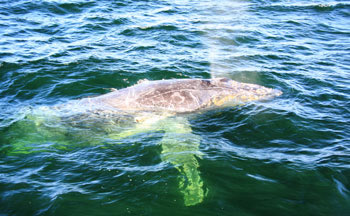
Southern Right and Humpback whales head for the bays during early winter and spring when they arrive to give birth before returning to the Antarctic waters to feed for the summer months.
Whale Watching in Albany, WA
If you are coming to Albany to watch the Whales, we recommend booking your whale watching tour in advance.
Whale Watching is a fantastic way to spend the morning or afternoon. The King George Sound is a sheltered harbour offering two passages to the Great Southern Ocean.
The whales come and go in these sheltered water and it is unusual to go out and NOT see these humble, giant creatures. The great Humpback whales typically migrate up to 25,000 kilometres each year as they migrate between Antarctica and Australia.
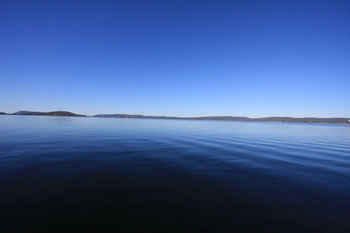
If you are interested in Whale Watching, you can find a Map to the Albany Pier [click here] where you will find the two whale-tour operators. Ample parking and toilets at the pier.
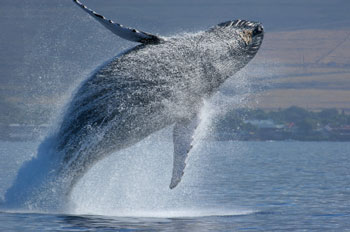
Humpback Whale
Humpback Whale
Length: 14 -19 metres long with calves approximately 5 metres.
Weight: 25 - 40 tonnes (40,000 kilograms)
Speed: 8 kmph (4 knots)
The Humpback whale is a beleen whale, which means it has baleen plates for filtering food from water, rather than having teeth.
They are a common sound in 'whale song' tapes and CDs. More information on Humpback Whales can be found at Wikipedia, the free encyclopedia. Visit the ACSonline for more about Humpbacks. These great mamals were once hunted to the brink of extinction.
Sperm Whales ~ (Physeter macrocephalus)
Sperm
Whale
Length: Male 15 – 20m Female 14m
Weight: Male 35 tonnes Female 19 tonnes
The sperm whale (Physeter macrocephalus) is the largest of all toothed whales, making them the Earth's largest living carnivore and largest living toothed animal. They feed on squid and fish, diving as deep as 2,200 metres (7,200 ft) in order to obtain it, making it the deepest diving mammal in the world.
Sperm whales are easily recoginised by the rectangular head shown in drawings of Herman Melville's "Moby Dick."
More information on Sperm Whales can be found at Wikipedia, the free encyclopedia.
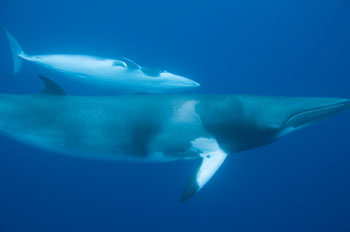
Southern Minke Whale
Minke Whale
Length: Adult 8 – 10m Calf 3m
Weight: Adult 8 tonnes Calf .45 tonnes
Speed: 25 kmph (13 knots)
Minke whales arch their backs while diving but do not raise their tail flukes. They can live up to 60 years.
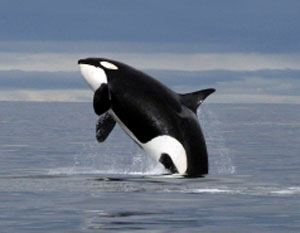
The Orca (Killer Whale)
The Orca whale belongs to the oceanic dolphin family and is found all around the world. They are seasonal visitors to the Rainbow Coast. Orcas live in pods (groups) of between 2 and 40. Each group includes at least one large male. Their social behaviour is worth noting, as it points us to another intelligence evolving in the largest of the dolphin family.
"The paper "Culture in Whales and Dolphins", goes as far as to say, "The complex and stable vocal and behavioral cultures of groups of killer whales (Orcinus orca) appear to have no parallel outside humans and represent an independent evolution of cultural faculties."
~ Wikipedia
Helping a stranded whale - How to assist
Helping a stranded whale:
Whales and dolphins can become stranded on the beach. If you find a stranded whale or dolphin, please contact The Department of Fisheries at: ALBANY REGIONAL OFFICE on 08 9841 7766
Suite 7, Frederick House, 70-74 Frederick St, Albany, WA, 6330
What can I do?
- Look for signs of movement.
- Be gentle.
- Protect the whale from the sun if possible.
- Pour cold water on the skin, especially the flippers and fluke.
- It may be possible to return a small whale to the ocean using a sling of canvas or towe1s. Carry it into the water and keep its blowhole above the surface until it can swim.
Southern
Right Whale
(Eubalaena australis)
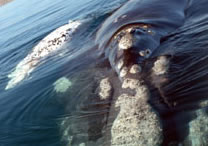
Right Whale
Length: Adult 15 – 18m Calf 5.5m
Weight: Adult 54 - 96 tonnes
Speed: 4 kmph (2 knots) – 10kmph (5 knots)
These whales are called 'right' whales because they were the 'right' whale for whalers to hunt. They were slow, and thus hunted easily. There are now only 7,500 Southern Right Whales spread throughout the Southern Hemisphere. Since hunting of the Southern Right Whale ceased, their numbers are estimated to have grown by 7% a year.
The Southern Right whale uses the sheltered beaches along the Rainbow Coast to birth their young - usually from July to October.
More information on Southern Right Whales can be found at Wikipedia, the free encyclopedia.
SAVE THE WHALES - AGAIN!
"Dad, what's a 'whaling boat' for?
 It was quite a conversation to have with my children... to answer their innocence with the truth was too horrendous. I can't really believe it myself... what a whaling boat is actually for. I couldn't let them know what humans have done to the whales, not at such a young age...
So, I spun a tale of 'Whale Research Boats' filled with people who are actively caring for the whales. (That made sense both to us and to them. Ships that are designed to CARE for this great species!)
It turns out this is exactly the same tale Japan, Iceland and Norway have been feeding to the public (yes, the adults!) for years. The story covers up the fact that these countries are STILL slaughtering whales, dolphins and porpoises. Ick! How careless we've become with our friends from the sea.
Rainbow Coast Web Design is active in the campaign against such 'mock research' and hopes you'll do your part to ensure we never again slaughter the whales...!
Whaling? A Tourist Attraction?
We do not find it very appealing to discuss, except to point out its brief history and to oppose those still 'hunting' whales in the open ocean in outher countries. I am glad Australia awoke from that 'necessity' many years ago. We love Australia. To the rest of the whaling countries: Let the ocean animals be!
JAPAN STILL WHALING DESPITE SANCTUARY:
The Southern Ocean Whale Sanctuary was established by the IWC in 1994 with 5 countries supporting the agreement and Japan opposing it. The status of the Southern Ocean Sanctuary is reviewed and open to change by the IWC every 10 years. During the 2004 meeting a proposal was made by Japan to remove the sanctuary, but it failed to reach the 75% majority required (it received 25 votes in favour and 30 votes against with two abstentions).
As sanctuaries only apply to commercial whaling, Japan has continued to hunt whales inside the Southern Ocean Whale Sanctuary because its whaling is done in accordance with a provision in the IWC charter permitting whaling for the purposes of . Japan also lodged a formal objection to the sanctuary with regard to minke whales, meaning that under IWC rules, the terms of the sanctuary do not apply to Japan with respect to minkes. The catch of the 2005 season (Dec 05-Mar 06) inside the sanctuary included 856 minke whales and ten of the endangered Fin whale. In 2007 - 2008 Japan planned to take 935 minke whales and 50 fin whales.
(*source Wikipedia Southern Ocean Whale Sanctuary)
History of Whaling in WA
Whaling in Western Australia was one of the first viable industries established in the Swan River Colony following the arrival of British settlers in 1829. The industry had numerous ups and downs until the last whaling station closed in Albany in 1978.
There are two main species of whales (order Cetacea) which form aggregations along the Western Australian coastline: the Southern Right Whale (Eubalaena australis), and the Humpback Whale (Megaptera novaeangliae). The Southern Rights are slow swimmers and their carcases tend to float due to the high concentration of oil in the blubber - hence the name "right" as it made the task of the whale chasers easier. Its conservation status is now listed as "endangered" as result of more than 150 years of hunting.
Both species migrated along the north-south coastline stopping in bays such as Geographe Bay (east of Cape Naturaliste) and Flinders Bay (east of Cape Leeuwin) for mating and breeding. Other species occasionally caught were Sperm Whales and Blue Whales, although these tended to be seen mainly along the southern coast of Western Australia.
(*This brief history of the Western Australian Whaling 'Industry' can be found on wikipedia: Whaling in Western Australia )
That's as much as we're happy to say about reliving the whaling past. Yes, it may be a part of our history but we're not into it. ~ Editor
Current Weather on the Coast
Weather in Albany
Weather in Denmark
Weather in Walpole
Additional resources for visiting the Rainbow Coast:
 Seasons of the Coast
 You will find a Seasons Calendar with Wildflower and a Whales to help you plan your visit to the South Coast - The Rainbow Coast! Visit Seasons of the Coast
 South Coast Beaches Map
 South Coast Beaches from west of Walpole to East of Albany all on one map! Visit South Coast Beaches Map
 South Coast Weather
 The climate of the Rainbow Coast is considered to be "the best in the world," according to those who live here. Visit South Coast Weather
Rainbow Coast Regions:
 Albany Region
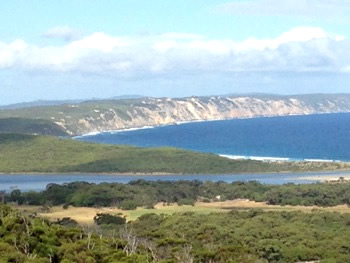
 The Albany Region of Western Australia is a land of mountains and waterways. An amazing region to explore. Visit Albany Region
 Denmark Region
 The Denmark Region is gorgeous. Trees, hills, beaches, rocks, wildlife around the river and the inlet. Visit Denmark Region
 Walpole Region
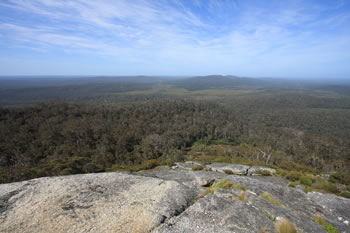
 Walpole is the western end of the Rainbow Coast and is surrounded by National Park and forested wilderness. Visit Walpole Region
Main Attractions on the Coast:
 Ocean Beach
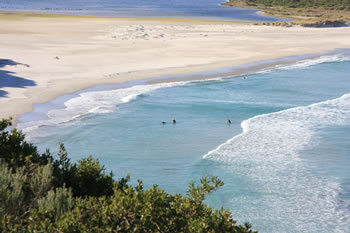
 Ocean Beach is set between the Wilson Inlet and the Great Southern Ocean, and is the closest beach to Denmark Town. A popular surfing spot and lookout.. Visit Ocean Beach
 Greens Pool
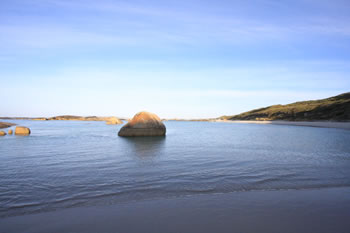
 Almost completely sheltered from the waves of the Great Southern Ocean, Greens Pool is a paradise. Visit Greens Pool
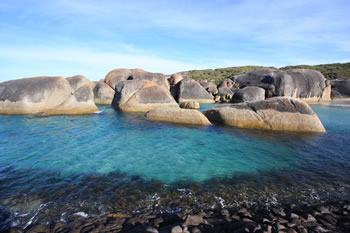 Elephant Rocks
 Giant rocks shaped like elephants stand together facing into the waves of the Great Southern Ocean Visit Elephant Rocks
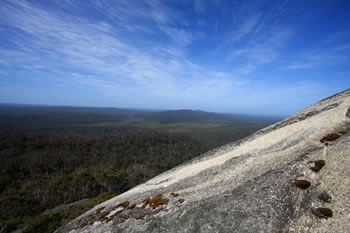 Mount Frankland
 Starting in the karri trees you wind up and through towards the summit of Mt Frankland way above the tree top canopy. Visit Mount Frankland
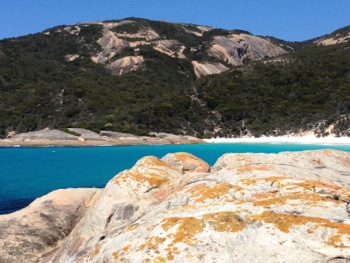 Two Peoples Bay NP
 Located approximately 25 kilometres north-east of Albany. Rediscovery of the presumed extinct noisy scrub-bird. Visit Two Peoples Bay NP
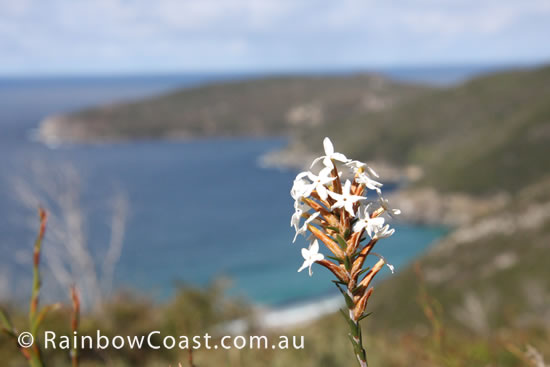 West Cape Howe National Park
 Containing the southernmost point of Western Australia this national park is astounding. Visit West Cape Howe National Park
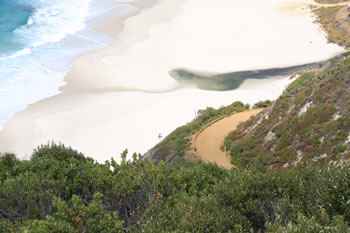 Shelley Beach
 Turquoise waters, verdant surrounds and ocean breeze make this beach a popular yet remote destination. Visit Shelley Beach
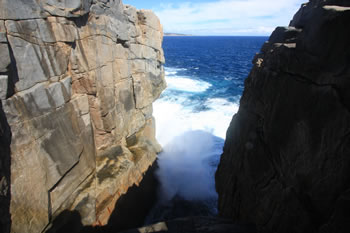
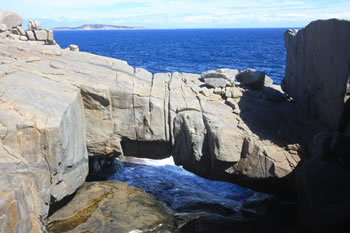 Natural Bridge
 The Natural Bridge is a granite formation caused by the gradual wearing away of the rock by the Great Southern Ocean. Visit Natural Bridge
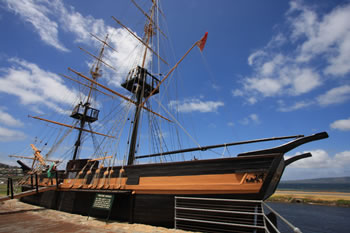 Brig Amity Replica
 Experience the first settlers arrival in Albany, the first settlement in Western Australia, from onboard a replica of the Amity. Visit Brig Amity Replica
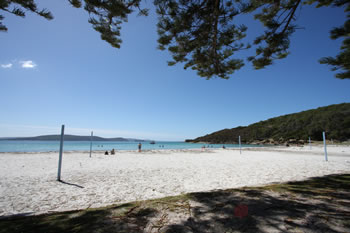 Middleton Beach
 The most popular beach in Albany. Swim or relax under the trees. Cafes and amenities. Visit Middleton Beach
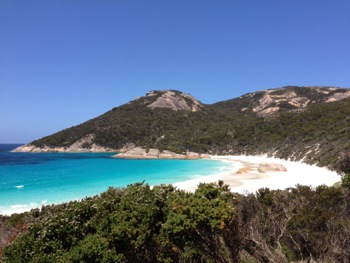 Little Beach
 This gorgeous beach is approximately 25 kilometres north east of Albany in Two Peoples Bay National Park. Visit Little Beach
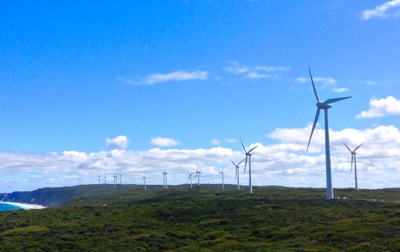 Albany Wind Farm
 Beautiful and productive green energy from the wind of the Torndirrup, just outside Albany City towards Frenchman Bay. Visit Albany Wind Farm
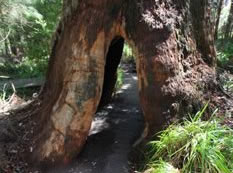 Ancient Empires Walk
 The Ancient Empires Walk takes you through the forest at the base of the Giant Tingle Trees at the Treetop Walk. Visit Ancient Empires Walk
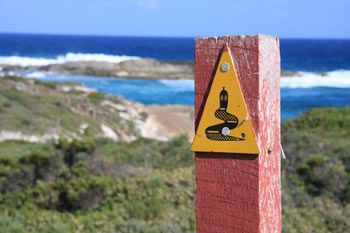 Bibbulmun Track
 The Bibbulmun Track stretches from Kalamunda in the Perth hills to Albany, through many locations in the heart of the Rainbow Coast. Visit Bibbulmun Track
 Denmark Wineries
 Denmark Wineries and Vineyards to visit while on holiday along the Rainbow Coast. Wineries with restaurants, music, cellar doors and more! Visit Denmark Wineries
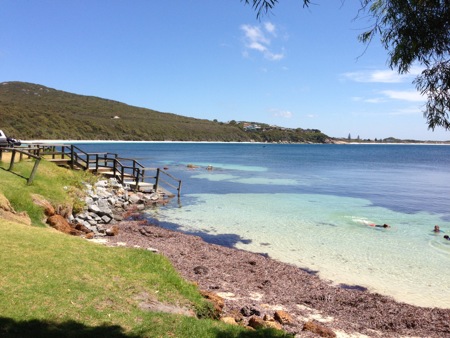 Frenchman Bay
 Located on the southern side of King George Sound this beautiful setting has a grassy picnic area, BBQs and boat launch. Ideal beachfront location for a great day out! Visit Frenchman Bay
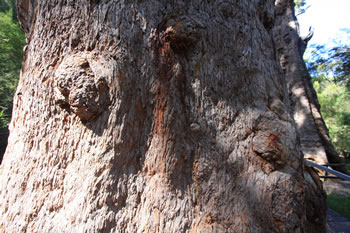 Giant Tingle Tree
 This Giant Tingle Tree is special because it the oldest living eucalypt in the world. It is an 800 metre walk from the car park to the Giant Tingle and back. Visit Giant Tingle Tree
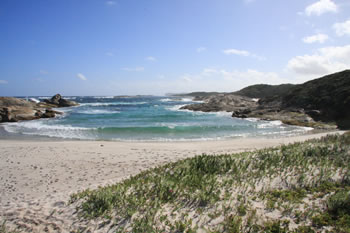 Lights Beach
 Inspiring lookout and beach offering spectacular views of William Bay from the east. A favourite local beach. Visit Lights Beach
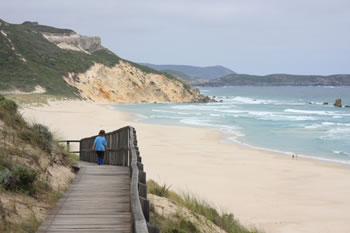 Mandalay Beach
 Spectacular views to Chatham Island, gorgeous white sandy beach it is a must-see... sometimes the shipwreck is visible too. Visit Mandalay Beach
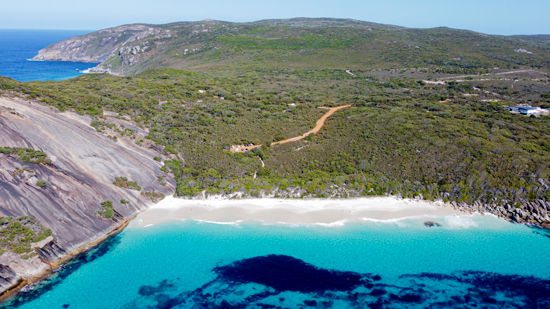 Misery Beach Albany
 Misery Beach is a hidden gem on the southern coast of Western Australia known for stunning natural beauty and a tranquil atmosphere. Visit Misery Beach Albany
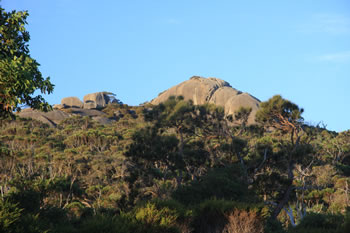 Monkey Rock
 Spectacular elevated views over William Bay Nat. Park, Ratcliffe Bay, Ocean Beach and the Nullaki Peninsula. Visit Monkey Rock
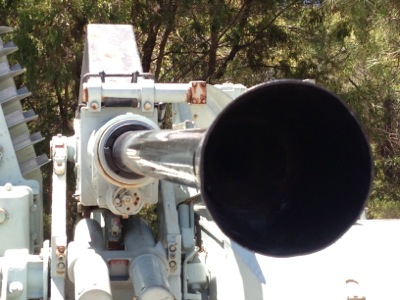 Princess Royal Fortress
 One of the best outdoor military museums in Australia. The Fortress is within the Albany Heritage Park, atop Mount Adelaide. Visit Princess Royal Fortress
South Coast Beaches Map South Coast Beaches from west of Walpole to East of Albany all on one map! Visit South Coast Beaches Map
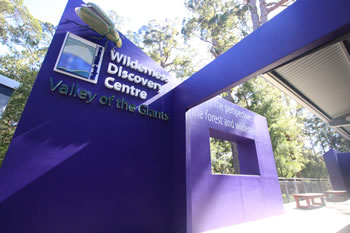 Valley of the Giants
 The Valley of the Giants Wilderness Discovery Centre at the Treetop Walk is the most visited place on the Rainbow Coast. Visit Valley of the Giants
Other amazing locations in the South-West of Western Australia!
More information on the south-west coast in our other Western Australian travellers guides:
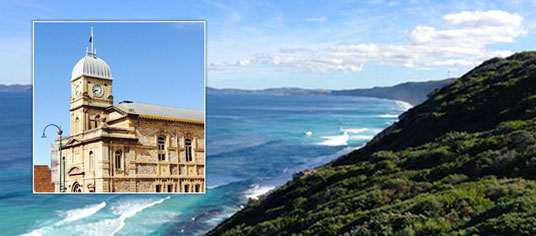
Albany Tourist Information:
Albany WA
The Albany is the oldest settlement in Western Australia. Filled with history, surrounded by beaches and waterways, and a great place to visit while on holiday on the south coast of WA. Visit Albany today.
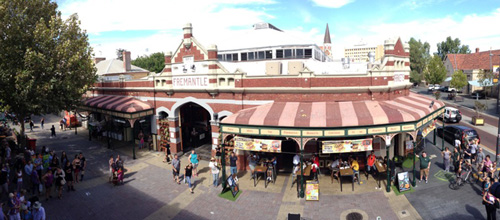
Have you visited?
Fremantle WA
Fremantle, the Port City, is located south-west of Perth at the mouth of the Swan River. Fremantle's vibrant nightlife, music scene and cafe' culture make Fremantle a perfect getaway from the bustle of Perth. Beaches, history, shopping, dining out, and more. VISIT FREMANTLE
Have you visited?
Margaret River, WA
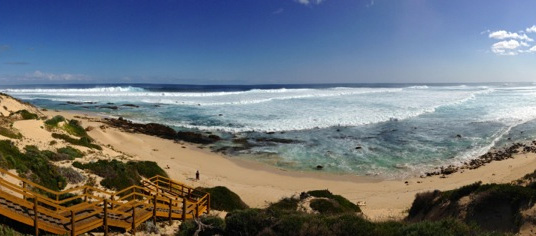
The Margaret River Region is an area of magnificent beauty on the western coast of the south west of WA. From the expansive shores of Busselton on Geographe Bay, through Dunsborough & Margaret River to Augusta, the Margaret River Region is fantastic. VISIT MARGARET RIVER
Have you visited?
Denmark WA
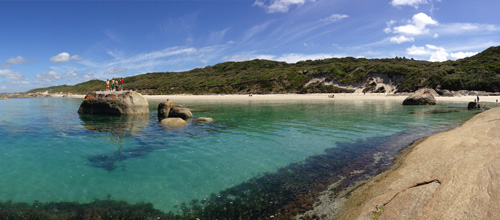
Denmark WA is one of the most beautiful places along the south coast as it has forests, beaches, rivers and waves. Everything you need for the perfect south coast holiday. Denmark Wineries are popular too! Info on Denmark Town including shopping, dining & history, VISIT DENMARK WA