


Whale Watching, Albany WA
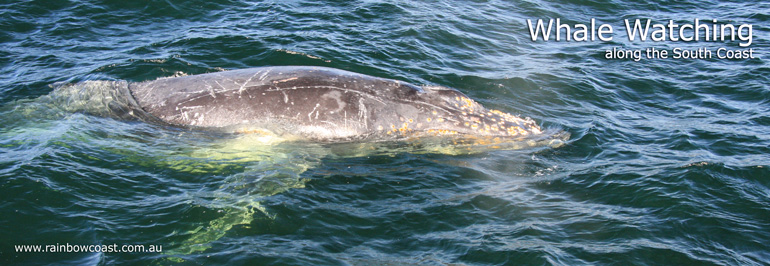
Whale Watching Tours are a fantastic way to spend the morning or afternoon. These kings of the ocean visit each year between June and October and can be viewed up close on a whale watching tour. Click/tap to find out about the Whales of the Southern Ocean.
Whale Watching in Albany, WA
If you are coming to Albany to watch the Whales, we recommend booking your whale watching tour in advance.
Whale Watching is a fantastic way to spend the morning or afternoon. The King George Sound is a sheltered harbour offering two passages to the Great Southern Ocean.
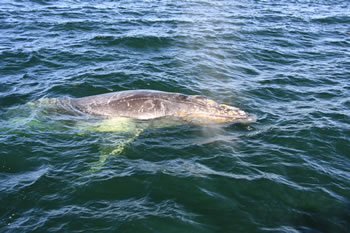
The whales come and go in these sheltered water and it is unusual to go out and NOT see these humble, giant creatures.
The great Humpback whales typically migrate up to 25,000 kilometres each year as they migrate between Antarctica and Australia.
If you are interested in Whale Watching, you can find a Map to the Albany Pier [click here] or scroll down to see the map on this page. This is where you will find the two whale-tour operators. Ample parking and toilets at the pier.
An ideal whale habitat, the sheltered waters around Albany and Denmark are ideal for young whales preparing to take the long journey south to the deep southern ocean around Antarctica.
I'm glad to know our friends of the sea find this area peaceful again. The whales come and go in these sheltered water and it is common to see several of these humble, giant creatures. Both whale-tour operators work from the Albany Pier.
Whale Watching Tours in Albany, Western Australia
Our whale-watching experiences in Albany, WA have always been fantastic. They are fun for everyone, engaging and refreshing, and the waters of King George Sound are truly beautiful.
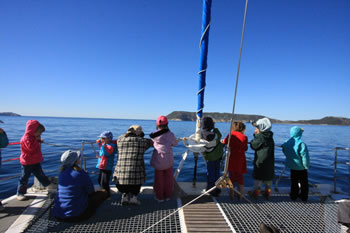
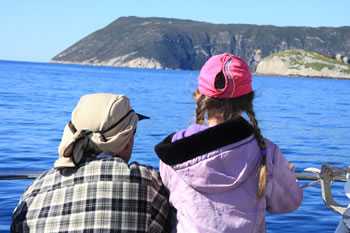
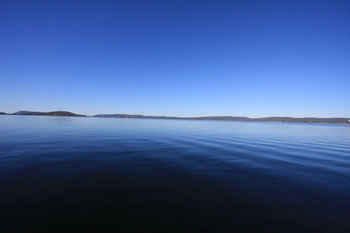
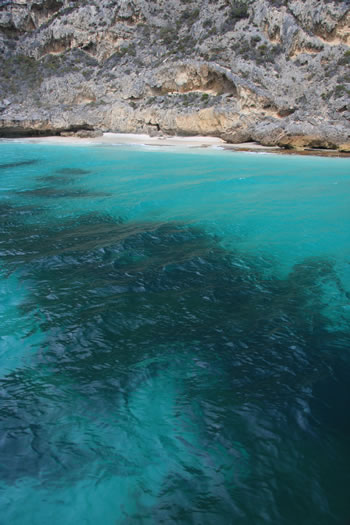
Heading out of the Princess Royal Harbour into the King George Sound it is easy to see why shipmen rejoyced to see the deep water harbour, offering easy access to land with the deep blue water of the sound emptying into the Southern Ocean.
It is still today one of the worlds best natural deep water channels.
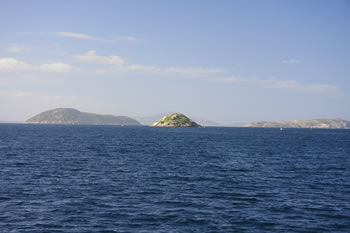
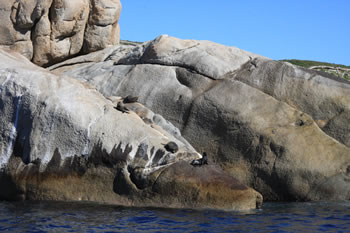
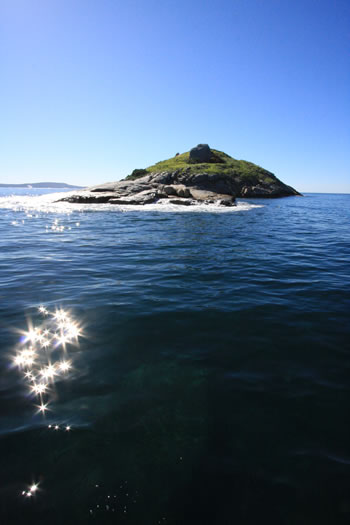
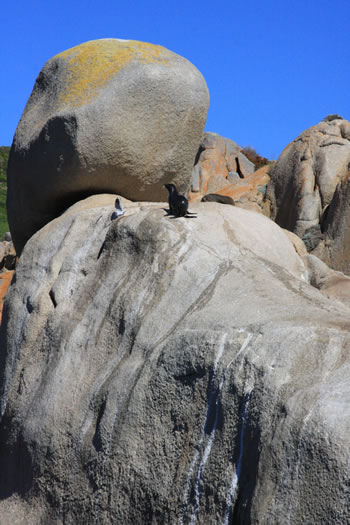
Dolphins and Seals can be seen in the sheltered waters, the seals most often laze in on the warm rocks off of Seal Island (below).
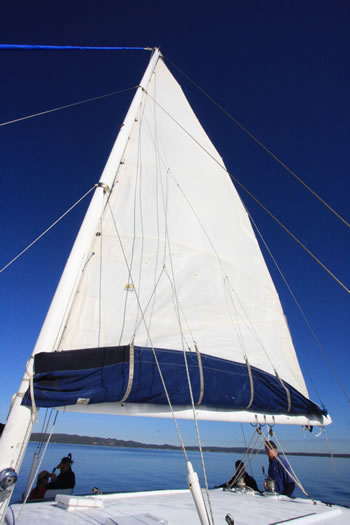
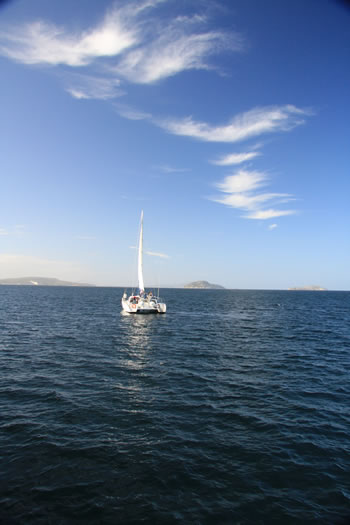
We found "Sail Away" easy and comfortable, the pace most enjoyable in the beautiful sailboat.
John's knowlege of the local wildlife extends back along his years. We have no doubt you'll be delighted.
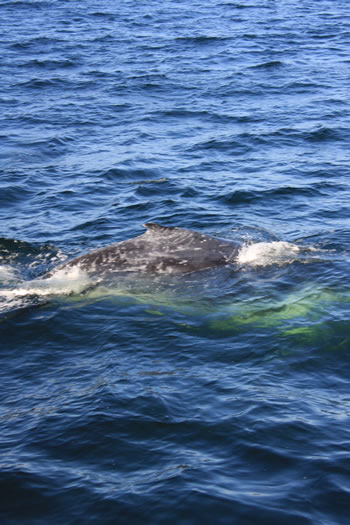
Family Friendly Whale Tours
Each time we visit the whales our entire family participates in the adventure, and everyone enjoys the time on the ocean spotting seals, whales and dolphins.
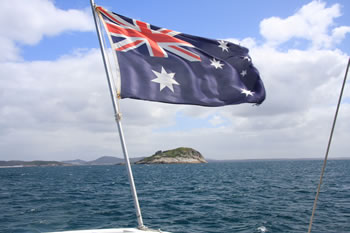
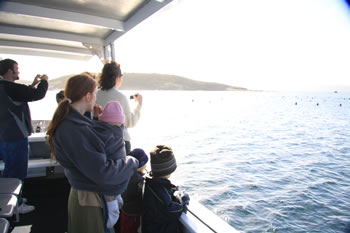
Albany Whale Watching
If you're visiting the Rainbow Coast btween June and October be sure to take the opportunity to go on a Whale Watching Tour. It's a memorable experience!
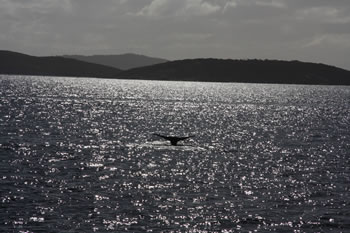
Albany Pier for Whale Watching
Map of Albany Pier for Whale Watching Cruises. Albany Whale Tours start here! Tap the markers for information about the locations on the Map below.
What's on the map? These are the locations plotted above:
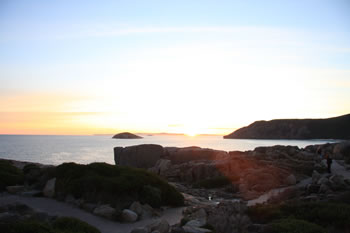 Torndirrup National Park
 Including The Gap, Natural Bridge, The Blowholes, Jimmy Newells Harbour, Stony Hill, Cable Beach & Stony Hill. Visit Torndirrup National Park
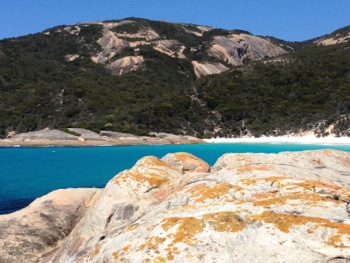 Two Peoples Bay NP
 Located approximately 25 kilometres north-east of Albany. Rediscovery of the presumed extinct noisy scrub-bird. Visit Two Peoples Bay NP
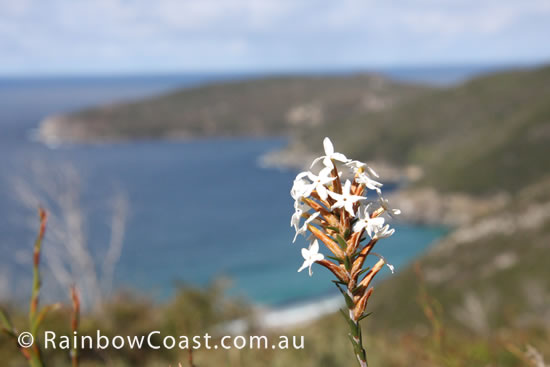 West Cape Howe National Park
 Containing the southernmost point of Western Australia this national park is astounding. Visit West Cape Howe National Park
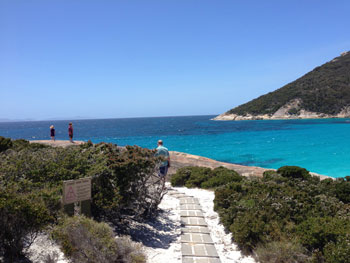 Two Peoples Bay Heritage Trail
 Heritage Trail from the Visitors Centre to Little Beach Visit Two Peoples Bay Heritage Trail
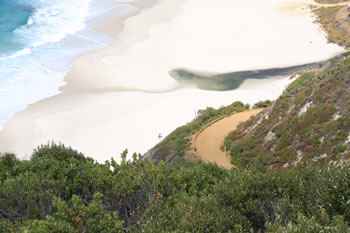 Shelley Beach
 Turquoise waters, verdant surrounds and ocean breeze make this beach a popular yet remote destination. Visit Shelley Beach
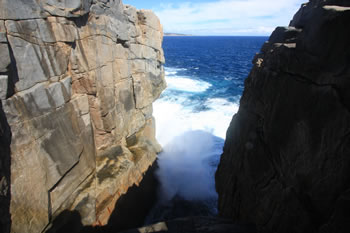
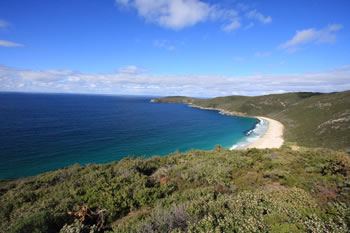 Shelley Beach Lookout
 A beautiful scenic lookout with hang gliding and paragliding platforms. Visit Shelley Beach Lookout
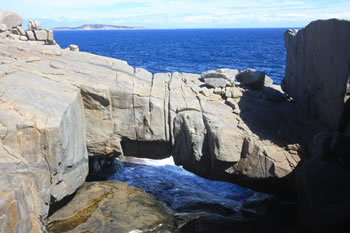 Natural Bridge
 The Natural Bridge is a granite formation caused by the gradual wearing away of the rock by the Great Southern Ocean. Visit Natural Bridge
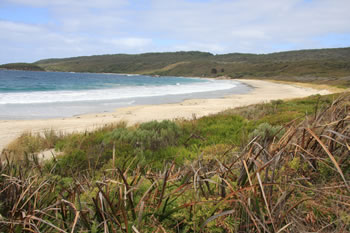 Cosy Corner
 White beaches plus camping facilities and lots of picnic benches. Cosy Corner is cosy indeed. Located just east of West Cape National Park between Albany and Denmark. Visit Cosy Corner
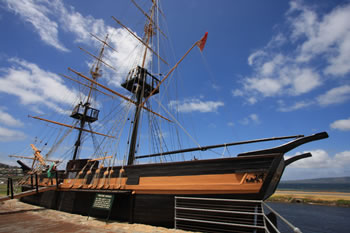 Brig Amity Replica
 Experience the first settlers arrival in Albany, the first settlement in Western Australia, from onboard a replica of the Amity. Visit Brig Amity Replica
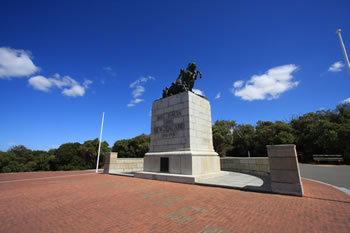 Mount Clarence
 Visit the ANZAC Desert Corps Memorial and view the coast from Padre White Lookout or Apex Lookout at the summit. Visit Mount Clarence
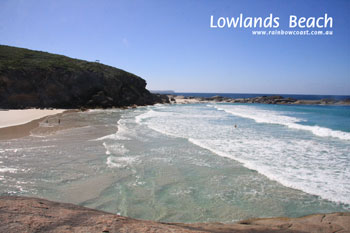 Lowlands Beach
 Beautiful, secluded beach west of West Cape Howe and east of the Wilson Inlet. Visit Lowlands Beach
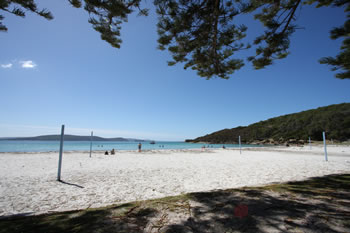 Middleton Beach
 The most popular beach in Albany. Swim or relax under the trees. Cafes and amenities. Visit Middleton Beach
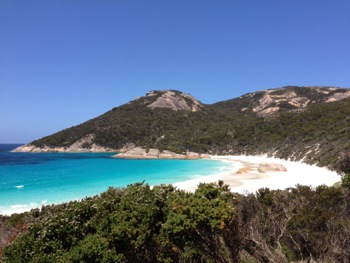 Little Beach
 This gorgeous beach is approximately 25 kilometres north east of Albany in Two Peoples Bay National Park. Visit Little Beach
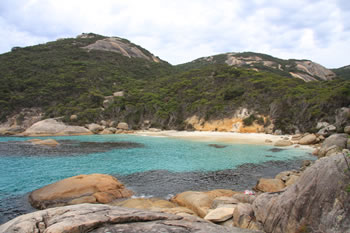 Waterfall Beach at Two Peoples Bay
 A small waterfall winds its way from the heathland to beautiful turquoise waters. Visit Waterfall Beach at Two Peoples Bay
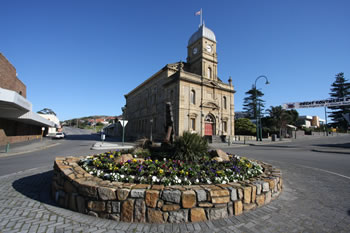 City of Albany
 Located between the hills of Mount Melville and Mount Clarence, the Nestled along the Princess Royal Harbour & King George Sound. Visit City of Albany
 Albany Farmers Market
 Saturday mornings. Fresh fruit and veggies from local growers. Organic produce available. Visit Albany Farmers Market
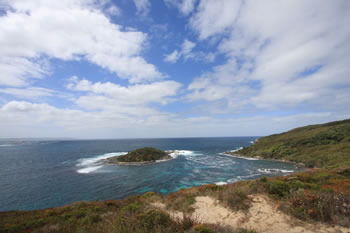 Forsyth Bluff
 This eastern most end of the National Park is rugged with large waves and waist to head high heathland. Visit Forsyth Bluff
Albany Pier (Cruises & Whale Watching) Albany Pier for embarking on a whale watching tour. Visit Albany Pier (Cruises & Whale Watching)
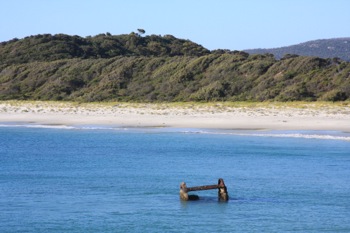 Boiler Bay Beach
 Walk along Ledge Beach on Boiler Bay in the Gull Rock National Park and view the top of the Awhina Shipwreck. Visit Boiler Bay Beach
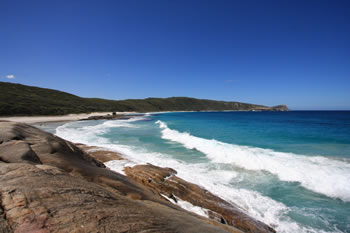 Cable Beach
 In the middle of the beach is a giant boulder which was lifted by the sea and placed onto the beach by the force of the waves. Visit Cable Beach
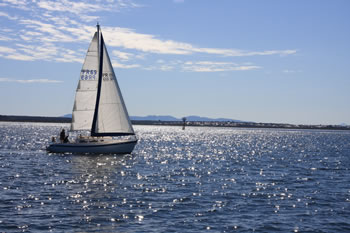 Former HMAS Perth Dive Wreck
 The Location of the Former HMAS Perth Dive Wreck for scuba divers. Visit Former HMAS Perth Dive Wreck
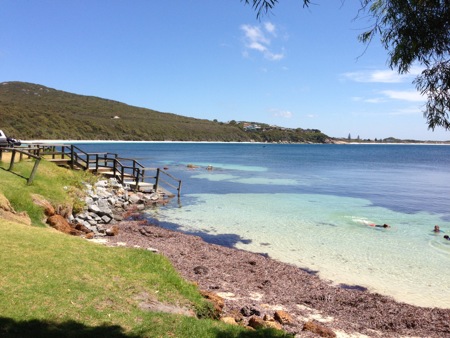 Frenchman Bay
 Located on the southern side of King George Sound this beautiful setting has a grassy picnic area, BBQs and boat launch. Ideal beachfront location for a great day out! Visit Frenchman Bay
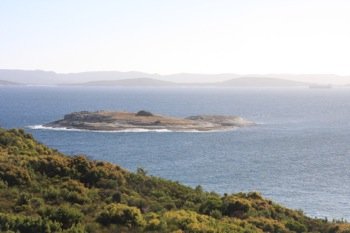 Gull Rock National Park
 25k east of Albany, Gull Rock National Park is a reserve for many endangered animals, trees and birds. Visit Gull Rock National Park
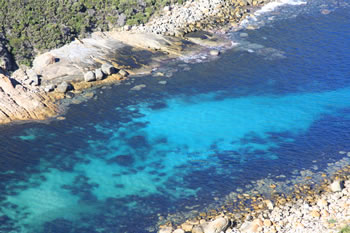 Jimmy Newells Harbour
 Jimmy Newells Lookout provides a breathtaking view of the harbour and great southern ocean. Visit Jimmy Newells Harbour
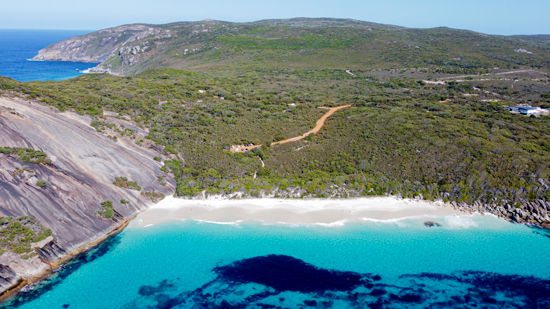 Misery Beach Albany
 Misery Beach is a hidden gem on the southern coast of Western Australia known for stunning natural beauty and a tranquil atmosphere. Visit Misery Beach Albany
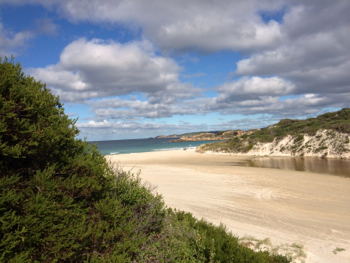 Nanarup Beach
 With picnic and barbecues, and easy stairway access, it is a delightful place to stop for lunch. Visit Nanarup Beach
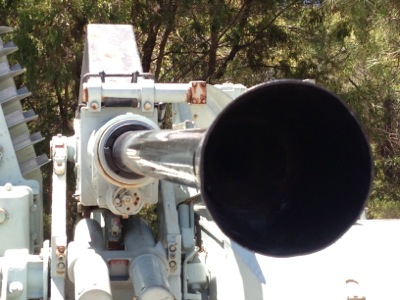 Princess Royal Fortress
 One of the best outdoor military museums in Australia. The Fortress is within the Albany Heritage Park, atop Mount Adelaide. Visit Princess Royal Fortress
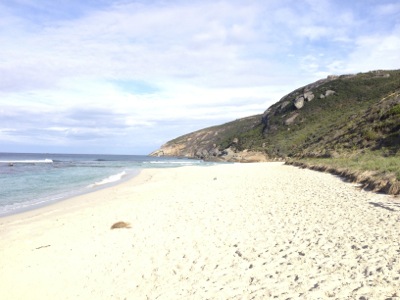 Salmon Holes
 Salmon Holes in Torndirrup NP offers incredible views from the lookout or descend to the white beach. Popular beach and rock fishing location. Visit Salmon Holes
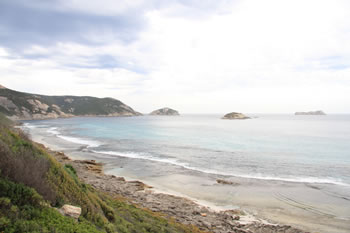 Sinker Reef
 It is easy to see why it was given this name as the jagged black rocks rise in rows along the entire stretch of coastline. Visit Sinker Reef
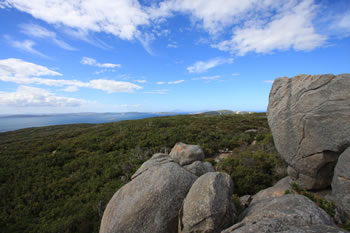 Stony Hill
 Stony Hill has a fabulous 500m fairly level circular walk which offers spectacular 360 degree views. Visit Stony Hill
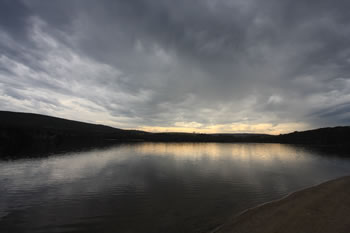 Taylor Inlet
 Taylor Inlet near Nanarup is a winding Inlet, home to many species of waterbirds. Visit Taylor Inlet
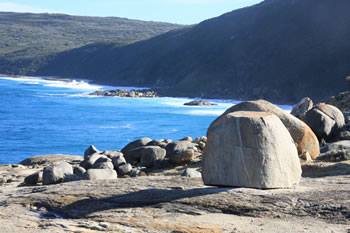 The Blowholes
 The Blowholes are crevasses in the granite stretching down to sea level far below. With each wave the holes blow air and water up the channel. Visit The Blowholes
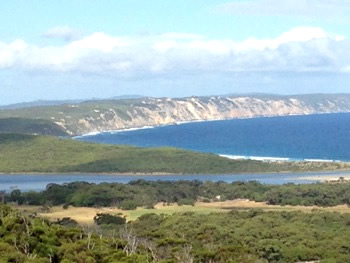 Top 10 Places to Visit
 Filled with many magical and majestic natural wonders, the best places are on the coast to enjoy... Visit Top 10 Places to Visit
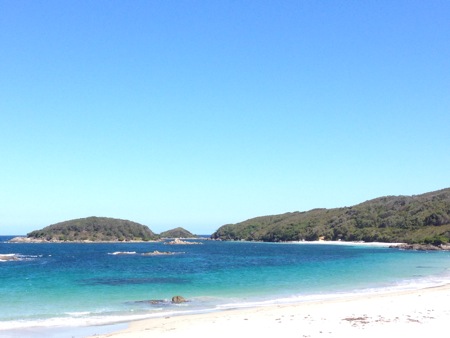 Top Beaches
 Pristine, clean and just like paradise. Swim in the rock pools, swim in clear waters, secluded bays, or snorkel around giant boulders all on the Rainbow Coast. Visit Top Beaches
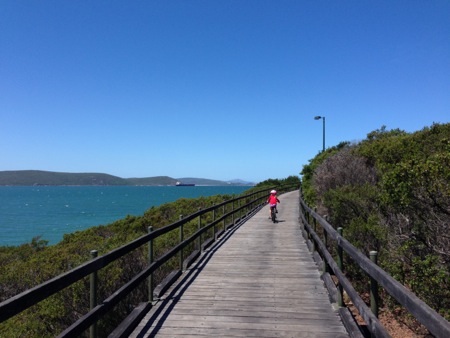 Top Biking Locations
 Top locations along the coast to start a bike ride. Tap the markers for information about the locations on the Map below. Visit Top Biking Locations
Top Historical Locations The Rainbow Coast is a historical destination. These are the most historical places to visit. Tap the markers for information about the locations on the Map below. Visit Top Historical Locations
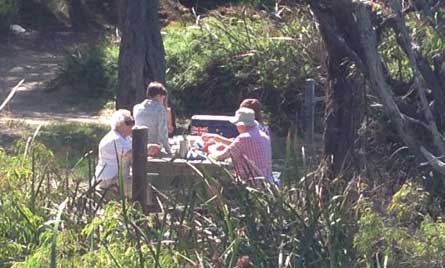 Top Picnic Spots
 Looking for a nice picnic spot, try these favourite picnic locations along the coast. Tap the markers for information about the locations on the Map below. Visit Top Picnic Spots
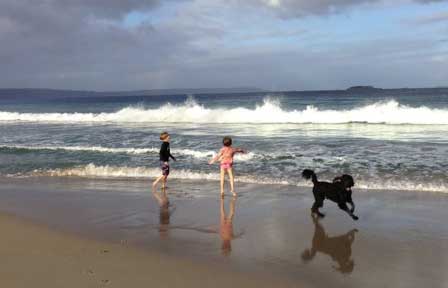 Top Places for Dogs
 If you have brought your four legged friend with you on holiday then you will need to know when you can take them for exercise and fun. Visit Top Places for Dogs
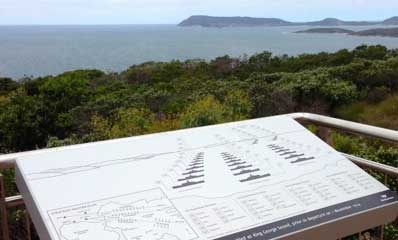 Top Places for Elders
 Accessible and elder-friendly locations along the south coast. Tap the markers for information about the locations on the Map below. Visit Top Places for Elders
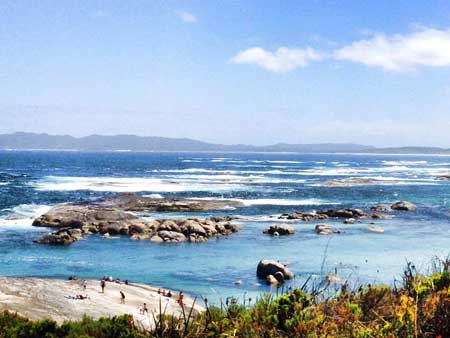 Top Places to Take Kids
 Kids love it on the Rainbow Coast. The spectacular coastline is family friendly and welcoming. Visit Top Places to Take Kids
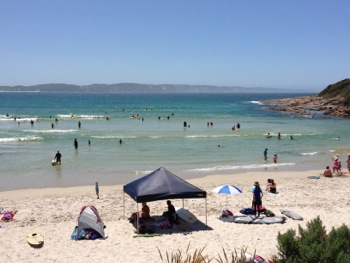 Top Surf Spots
 The waters of the spectacular Rainbow Coast are very tempting and there are quite a few places to catch the waves. Visit Top Surf Spots
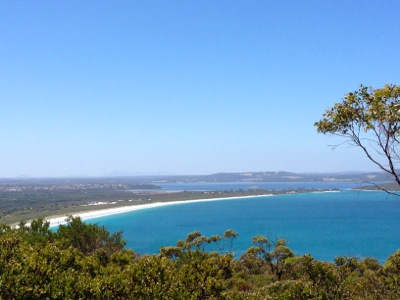
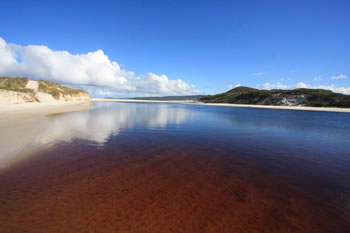 Torbay Inlet
 Many people find Torbay to be one of the most relaxing and peaceful places along this stretch of coastline. Visit Torbay Inlet
When to see the Whales along the Coast - June, July, Aug, Sept, Oct

We saw our first whale off the Torndirrup Peninsula near the Blowholes, since then we have sighted dozens of whales from both the shore and Whale Tours. It was beautiful to watch the humpback whales glide and splash, spouting water into the sky every so often. Majestic and magical creatures these are... Read more detailed information on the Whales of the Southern Ocean along the Rainbow Coast.


Whaling? Still?
There is an attraction in Albany called Whaleworld which once was once a whaling-station (Ick!) and is now a historical monument to our carelessness. Call the tourist information for details. We find it not very appealing to discuss, except to point out its brief history and to oppose those still 'hunting' whales in the open ocean. Really! Ick. Leave them alone!
JAPAN STILL WHALING DESPITE SANCTUARY:
The Southern Ocean Whale Sanctuary was established by the IWC in 1994 with 5 countries supporting the agreement and Japan opposing it. The status of the Southern Ocean Sanctuary is reviewed and open to change by the IWC every 10 years. During the 2004 meeting a proposal was made by Japan to remove the sanctuary, but it failed to reach the 75% majority required (it received 25 votes in favour and 30 votes against with two abstentions).
As sanctuaries only apply to commercial whaling, Japan has continued to hunt whales inside the Southern Ocean Whale Sanctuary because its whaling is done in accordance with a provision in the IWC charter permitting whaling for the purposes of . Japan also lodged a formal objection to the sanctuary with regard to minke whales, meaning that under IWC rules, the terms of the sanctuary do not apply to Japan with respect to minkes. The catch of the 2005 season (Dec 05-Mar 06) inside the sanctuary included 856 minke whales and ten of the endangered Fin whale. In 2007 - 2008 Japan planned to take 935 minke whales and 50 fin whales.
(*source Wikipedia Southern Ocean Whale Sanctuary)
History of Whaling in WA
Whaling in Western Australia was one of the first viable industries established in the Swan River Colony following the arrival of British settlers in 1829. The industry had numerous ups and downs until the last whaling station closed in Albany in 1978.
There are two main species of whales (order Cetacea) which form aggregations along the Western Australian coastline: the Southern Right Whale (Eubalaena australis), and the Humpback Whale (Megaptera novaeangliae). The Southern Rights are slow swimmers and their carcases tend to float due to the high concentration of oil in the blubber - hence the name "right" as it made the task of the whale chasers easier. Its conservation status is now listed as "endangered" as result of more than 150 years of hunting.
Both species migrated along the north-south coastline stopping in bays such as Geographe Bay (east of Cape Naturaliste) and Flinders Bay (east of Cape Leeuwin) for mating and breeding. Other species occasionally caught were Sperm Whales and Blue Whales, although these tended to be seen mainly along the southern coast of Western Australia.
(*An entire history of the Western Australian Whaling 'Industry' can be found on wikipedia: Whaling in Western Australia)
Current Weather on the Coast
Weather in Albany
Weather in Denmark
Weather in Walpole
Additional resources for visiting the Rainbow Coast:
 Seasons of the Coast
 You will find a Seasons Calendar with Wildflower and a Whales to help you plan your visit to the South Coast - The Rainbow Coast! Visit Seasons of the Coast
 South Coast Beaches Map
 South Coast Beaches from west of Walpole to East of Albany all on one map! Visit South Coast Beaches Map
 South Coast Weather
 The climate of the Rainbow Coast is considered to be "the best in the world," according to those who live here. Visit South Coast Weather
Rainbow Coast Regions:
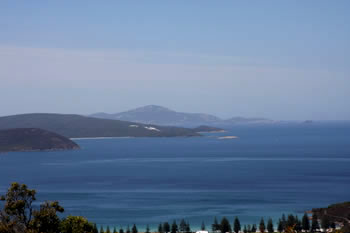 Albany Region
 The Albany Region of Western Australia is a land of mountains and waterways. An amazing region to explore. Visit Albany Region
Denmark Region The Denmark Region is gorgeous. Trees, hills, beaches, rocks, wildlife around the river and the inlet. Visit Denmark Region
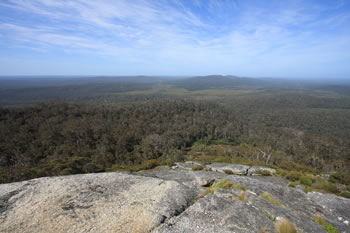 Walpole Region
 Walpole is the western end of the Rainbow Coast and is surrounded by National Park and forested wilderness. Visit Walpole Region
Main Attractions on the Coast:
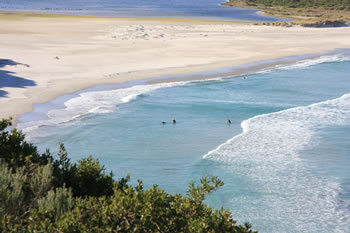 Ocean Beach
 Ocean Beach is set between the Wilson Inlet and the Great Southern Ocean, and is the closest beach to Denmark Town. A popular surfing spot and lookout.. Visit Ocean Beach
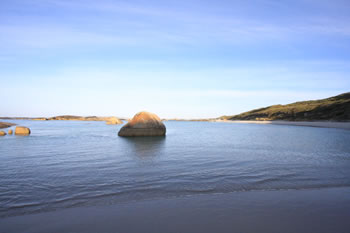 Greens Pool
 Almost completely sheltered from the waves of the Great Southern Ocean, Greens Pool is a paradise. Visit Greens Pool
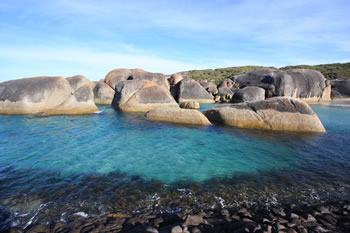 Elephant Rocks
 Giant rocks shaped like elephants stand together facing into the waves of the Great Southern Ocean Visit Elephant Rocks
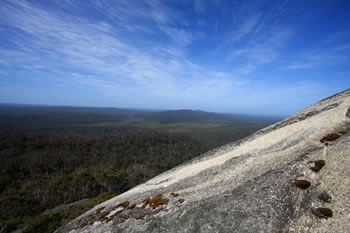 Mount Frankland
 Starting in the karri trees you wind up and through towards the summit of Mt Frankland way above the tree top canopy. Visit Mount Frankland
Two Peoples Bay NP Located approximately 25 kilometres north-east of Albany. Rediscovery of the presumed extinct noisy scrub-bird. Visit Two Peoples Bay NP
West Cape Howe National Park Containing the southernmost point of Western Australia this national park is astounding. Visit West Cape Howe National Park
Shelley Beach Turquoise waters, verdant surrounds and ocean breeze make this beach a popular yet remote destination. Visit Shelley Beach
Natural Bridge The Natural Bridge is a granite formation caused by the gradual wearing away of the rock by the Great Southern Ocean. Visit Natural Bridge
Brig Amity Replica Experience the first settlers arrival in Albany, the first settlement in Western Australia, from onboard a replica of the Amity. Visit Brig Amity Replica
Middleton Beach The most popular beach in Albany. Swim or relax under the trees. Cafes and amenities. Visit Middleton Beach
Little Beach This gorgeous beach is approximately 25 kilometres north east of Albany in Two Peoples Bay National Park. Visit Little Beach
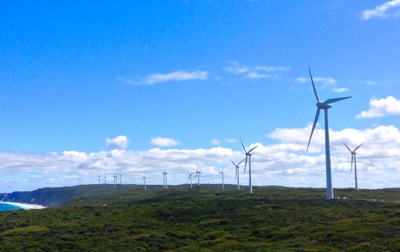 Albany Wind Farm
 Beautiful and productive green energy from the wind of the Torndirrup, just outside Albany City towards Frenchman Bay. Visit Albany Wind Farm
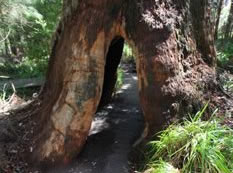 Ancient Empires Walk
 The Ancient Empires Walk takes you through the forest at the base of the Giant Tingle Trees at the Treetop Walk. Visit Ancient Empires Walk
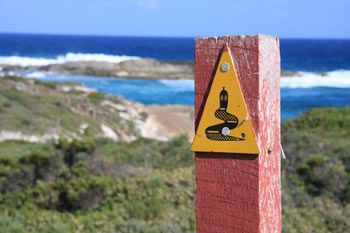 Bibbulmun Track
 The Bibbulmun Track stretches from Kalamunda in the Perth hills to Albany, through many locations in the heart of the Rainbow Coast. Visit Bibbulmun Track
 Denmark Wineries
 Denmark Wineries and Vineyards to visit while on holiday along the Rainbow Coast. Wineries with restaurants, music, cellar doors and more! Visit Denmark Wineries
Frenchman Bay Located on the southern side of King George Sound this beautiful setting has a grassy picnic area, BBQs and boat launch. Ideal beachfront location for a great day out! Visit Frenchman Bay
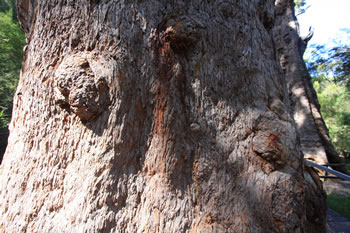 Giant Tingle Tree
 This Giant Tingle Tree is special because it the oldest living eucalypt in the world. It is an 800 metre walk from the car park to the Giant Tingle and back. Visit Giant Tingle Tree
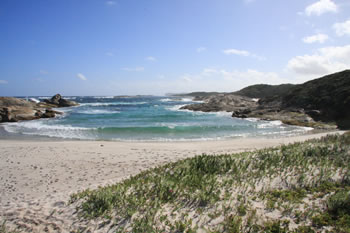 Lights Beach
 Inspiring lookout and beach offering spectacular views of William Bay from the east. A favourite local beach. Visit Lights Beach
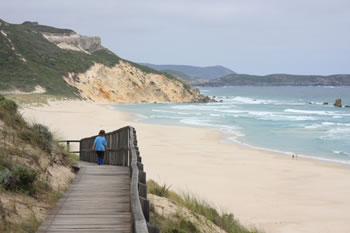 Mandalay Beach
 Spectacular views to Chatham Island, gorgeous white sandy beach it is a must-see... sometimes the shipwreck is visible too. Visit Mandalay Beach
Misery Beach Albany Misery Beach is a hidden gem on the southern coast of Western Australia known for stunning natural beauty and a tranquil atmosphere. Visit Misery Beach Albany
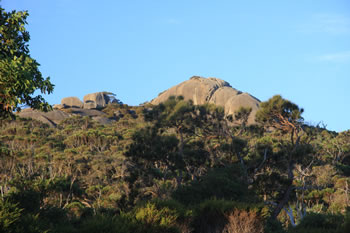 Monkey Rock
 Spectacular elevated views over William Bay Nat. Park, Ratcliffe Bay, Ocean Beach and the Nullaki Peninsula. Visit Monkey Rock
Princess Royal Fortress One of the best outdoor military museums in Australia. The Fortress is within the Albany Heritage Park, atop Mount Adelaide. Visit Princess Royal Fortress
South Coast Beaches Map South Coast Beaches from west of Walpole to East of Albany all on one map! Visit South Coast Beaches Map
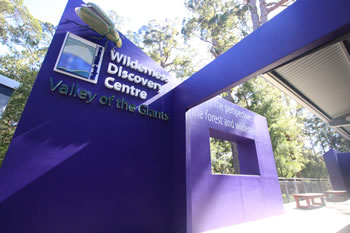 Valley of the Giants
 The Valley of the Giants Wilderness Discovery Centre at the Treetop Walk is the most visited place on the Rainbow Coast. Visit Valley of the Giants
Other amazing locations in the South-West of Western Australia!
More information on the south-west coast in our other Western Australian travellers guides:
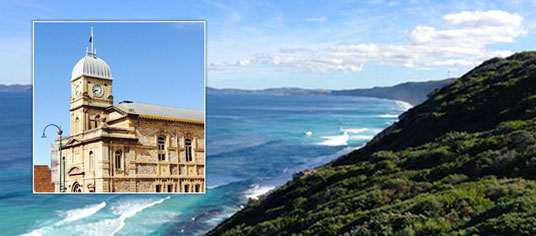
Albany Tourist Information:
Albany WA
The Albany is the oldest settlement in Western Australia. Filled with history, surrounded by beaches and waterways, and a great place to visit while on holiday on the south coast of WA. Visit Albany today.
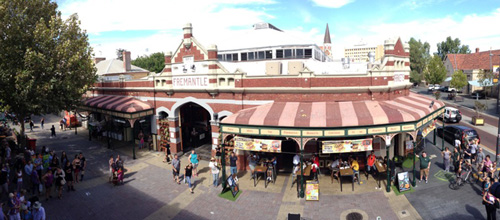
Have you visited?
Fremantle WA
Fremantle, the Port City, is located south-west of Perth at the mouth of the Swan River. Fremantle's vibrant nightlife, music scene and cafe' culture make Fremantle a perfect getaway from the bustle of Perth. Beaches, history, shopping, dining out, and more. VISIT FREMANTLE
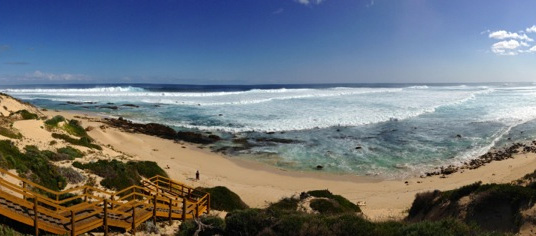
Have you visited?
Margaret River, WA
The Margaret River Region is an area of magnificent beauty on the western coast of the south west of WA. From the expansive shores of Busselton on Geographe Bay, through Dunsborough & Margaret River to Augusta, the Margaret River Region is fantastic. VISIT MARGARET RIVER
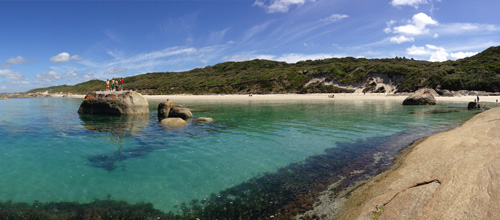
Have you visited?
Denmark WA
Denmark WA is one of the most beautiful places along the south coast as it has forests, beaches, rivers and waves. Everything you need for the perfect south coast holiday. Denmark Wineries are popular too! Info on Denmark Town including shopping, dining & history, VISIT DENMARK WA